The Complete Rio de Janeiro Travel Guide 2026
Everything you need to plan a trip to Rio de Janeiro — from a local who lives in Ipanema and hosts travelers from around the world. Best things to do, where to stay, when to visit, and how to experience the real Rio.
 The view from your rooftop — Two Brothers Mountain, Ipanema Beach, and the South Atlantic
Best Time to Visit Rio
Rio is a year-round destination, but timing your visit changes everything — from hotel prices to beach crowds to Carnival energy. Here’s what each season actually feels like.
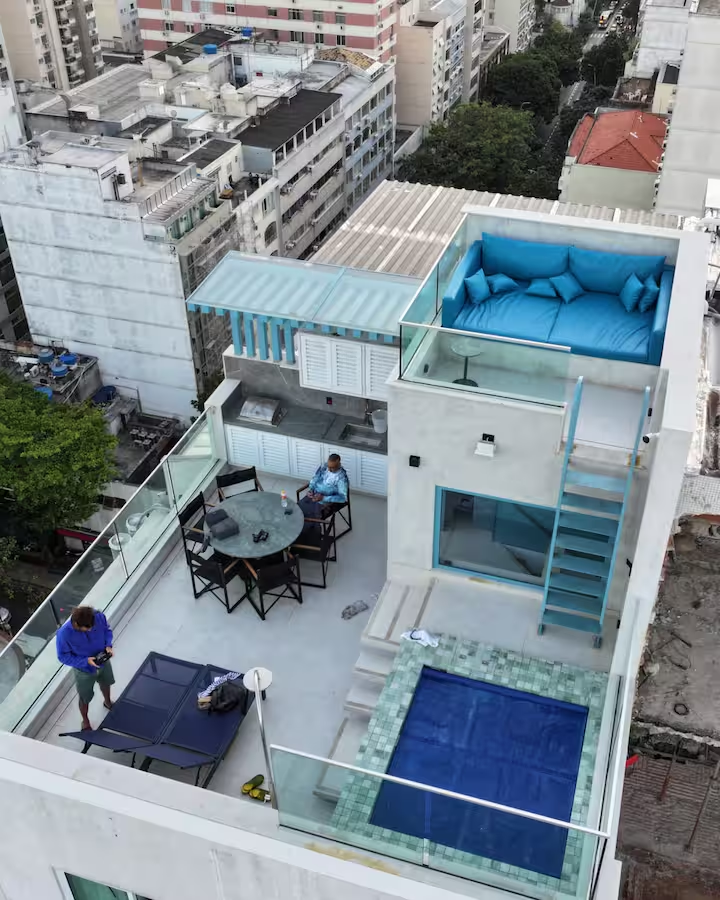 Rio’s geography — mountains, lagoon, beach, and city in one frame
| Season | Months | Weather | Crowds & Prices | Best For |
|---|---|---|---|---|
| Summer | Dec – Feb | Hot & humid, 27–38°C | Peak. Highest prices. Book 3+ months ahead. | Beach days, Carnival, New Year’s Eve |
| Autumn | Mar – May | Warm, 23–30°C, less rain | Moderate. Best value after Carnival. | Sightseeing, hiking, lower hotel rates |
| Winter | Jun – Aug | Mild, 18–25°C, some rain | Lowest prices, thinnest crowds | Budget travel, city exploring, no beach |
| Spring | Sep – Nov | Warming, 22–28°C | Moderate. Building toward peak. | Pre-season deals, recovering nature |
Carnival Timing
Carnival moves — it’s 40 days before Easter. In 2026 it falls in February. Book accommodation 4-6 months in advance. The Sambódromo parade is the headline, but the real magic is in the blocos (street parties) in Ipanema and Leblon.
New Year’s Eve (Réveillon)
Millions gather on Copacabana Beach in white for fireworks. It’s spectacular but requires planning. Many restaurants close for private parties. The penthouse rooftop offers a front-row seat without the crowds.
Where to Stay in Rio
Ipanema is the best base for a Rio vacation — but each neighborhood has a distinct personality. Here’s how they compare for first-time visitors.
| Neighborhood | Vibe | Beach | Dining & Nightlife | Safety | Best For |
|---|---|---|---|---|---|
| IpanemaOur location | Upscale, walkable, local + tourist mix | Posto 9 — Rio’s best beach | World-class on Rua Visconde de Pirajá & Barão da Torre | Very safe. 24/7 foot traffic. | First-timers, beach lovers, foodies |
| Leblon | Quiet, wealthy, family-oriented | Leblon Beach — calmer than Ipanema | Excellent fine dining, subdued nightlife | Safest in Rio. Heavy private security. | Families, luxury travelers, peace |
| Copacabana | Iconic, touristy, energetic | Copacabana Beach — 4km stretch | Endless options, tourist-oriented | Safe on main strips. Avoid side streets at night. | Budget travelers, iconic experience |
| Santa Teresa | Bohemian, artistic, hilly | None — take taxi to beach | Great bars, live music, local scene | Daytime is fine. Be cautious at night. | Art lovers, solo travelers, hipsters |
| Botafogo | Hipster, young, emerging | Botafogo Beach — not for swimming | Best craft beer & bar scene in Rio | Generally safe. Well-connected by metro. | Nightlife seekers, budget foodies |
| Centro / Lapa | Historic, business district | None | Lapa samba scene is legendary | Busy during day. Avoid empty streets at night. | History buffs, nightlife-only stays |
Why Ipanema Wins
Ipanema offers the best combination of beach access, safety, dining, and walkability in Rio. You’re 2.5 blocks from Posto 9 (the best section of Ipanema Beach), surrounded by world-class restaurants on Rua Visconde de Pirajá and Barão da Torre, and connected by metro to Christ the Redeemer, Sugarloaf, and the airport. Leblon is great if you want quiet luxury. Copacabana works if you’re on a budget. But Ipanema is the sweet spot.
 Ipanema’s tree-lined streets — walkable, safe, and full of cafés
Essential Experiences
The 9 things you cannot miss in Rio de Janeiro — and how to experience them like a local, not a tour bus passenger.
Christ the Redeemer
The most iconic view in Rio. Take the cog train up Corcovado through Tijuca Forest. Go at sunrise (7:30 AM slot) for fewer crowds and golden light. Clear days only — check visibility before you buy tickets.
Official Ticket SiteSugarloaf Mountain
Two cable car rides take you to the top of Pão de Açúcar for 360° views of Guanabara Bay. Sunset is the prime time — the last car down is at 8 PM. The view of Christ from the top is unbeatable.
Bondinho Official SiteIpanema Beach (Posto 9)
Rio’s best stretch of sand is Posto 9 in Ipanema — where the locals actually go. Rent a cadeira (beach chair) from a barraca, order a coconut water and a pastel, and stay until sunset. The people-watching is world-class.
See neighborhood guide →Tijuca National Forest
The world’s largest urban rainforest. Hike to Pedra Bonita for hang gliding views, visit the Taunay Waterfall, or drive through the forest to the Chinese View (Vista Chinesa). Monkeys, toucans, and giant butterflies everywhere.
Santa Teresa Tram
Rio’s last historic tram line climbs through the bohemian Santa Teresa neighborhood. Cobblestone streets, colonial mansions, street art, and the iconic Selarón Steps. Perfect for an afternoon of wandering.
Museum of Tomorrow
Designed by Santiago Calatrava, this is one of the most stunning science museums on earth. Interactive exhibits on climate, cosmos, and the future of humanity. The architecture alone is worth the trip.
Official Museum SiteEscadaria Selarón
215 steps covered in over 2,000 hand-painted ceramic tiles from around the world. Created by Chilean artist Jorge Selarón as a tribute to Brazil. Go early (before 9 AM) to beat the crowds and get clean photos.
Rodrigo de Freitas Lagoon
The 7.5km lagoon below Two Brothers Mountain is Rio’s playground. Rent a bike, paddleboard, or just walk the loop at sunset. The lotus blooms in January and February are spectacular. Directly visible from the penthouse rooftop.
See neighborhood guide →Jardim Botânico
UNESCO biosphere reserve and one of the world’s great botanical gardens. Imperial palms, Amazonian orchids, and a Japanese garden. The bromeliad and cactus collections are extraordinary. Allow 2–3 hours.
 Christ the Redeemer — Rio’s most iconic landmark, visible from the penthouse rooftop
 Tijuca National Forest — the world’s largest urban rainforest, minutes from the penthouse
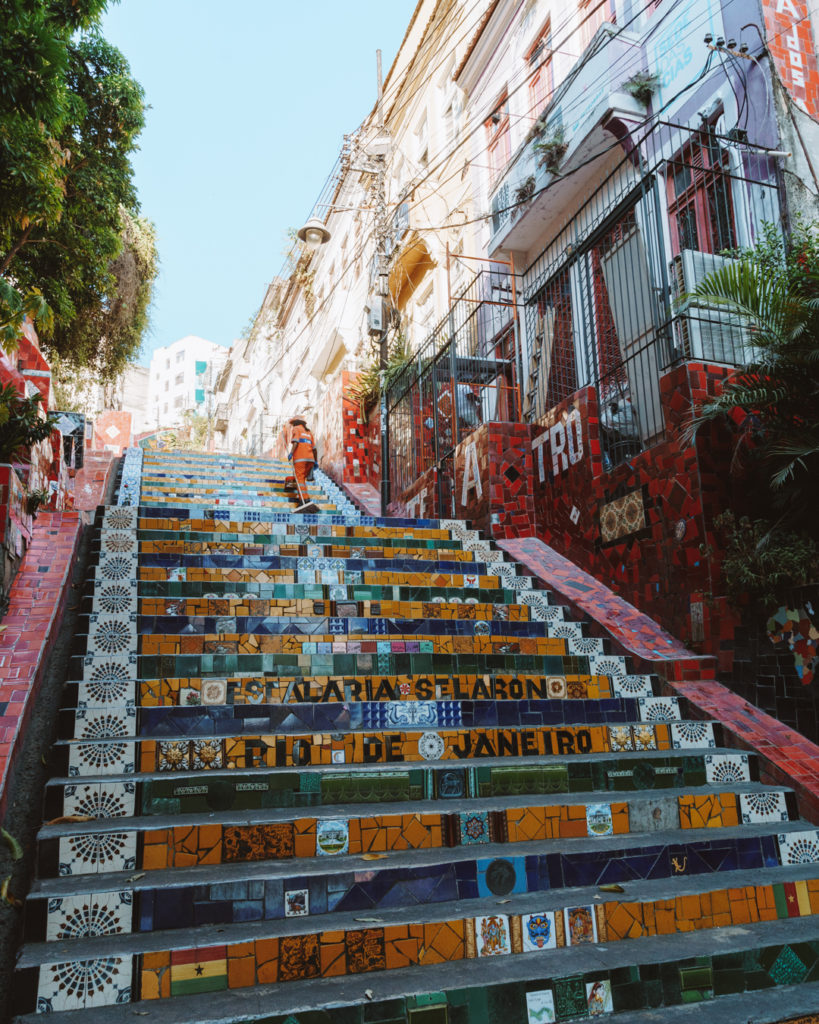 Escadaria Selaron — 215 steps of hand-painted tiles from around the world
 Santa Teresa tram — Rio’s last historic trolley climbing through the bohemian neighborhood
 Jardim Botânico — UNESCO biosphere reserve with imperial palms, Amazonian orchids, and a Japanese garden
 Rodrigo de Freitas Lagoon — Rio’s playground, directly visible from the penthouse rooftop
3 days in Rio,
starting at your door.
Every day begins and ends at the Ipanema Beach Penthouse — 2.5 blocks from Posto 9, walking distance to everything, and a private rooftop pool waiting when you get home. Metro Rio →
Day One — Beach & Sunset
Start slow. Grab breakfast at the corner bakery (pão de queijo + cafezinho), then walk 3 minutes to Posto 9. Rent a chair, order a coconut water, and settle in. In the afternoon, stroll the full length of Ipanema to Arpoador Rock for the sunset — Rio’s most essential daily ritual. Dinner on Rua Visconde de Pirajá or Barão da Torre, then back to the penthouse rooftop for a night swim.
- Posto 9 beach morning
- Ipanema boardwalk walk
- Arpoador Rock sunset
- Rua Visconde or Barão da Torre dinner
- Rooftop pool at night
All walking distance from the penthouse. See the full neighborhood guide →
Day Two — Icons & Views
Up early for the Corcovado train to Christ the Redeemer — sunrise slots are quieter and the light is golden. Back down for lunch in Santa Teresa. Afternoon at Sugarloaf Mountain for the cable car ride and panoramic views. Evening: samba night in Lapa, a rooftop bar in Leblon, or cross the tunnel to Botafogo for the city’s best hipster bar scene.
- Christ the Redeemer (sunrise)
- Santa Teresa tram & lunch
- Sugarloaf Mountain
- Samba in Lapa, Leblon rooftop, or Botafogo bars
Metro + Uber day. The penthouse’s central location makes every direction easy to reach. See why the location wins →
Day Three — Nature & Culture
Morning hike in Tijuca National Forest to Pedra Bonita — the hang gliding launch point with jaw-dropping views. Afternoon at the Botanical Garden or Museum of Tomorrow. Evening: stroll the Sunday Hippie Fair in Ipanema (if it’s Sunday) or a quiet dinner in Jardim Botânico. Cap the trip on the penthouse’s 17th floor lounge, watching the city light up with Niterói twinkling across the bay.
- Tijuca Forest hike (Pedra Bonita)
- Botanical Garden or Museum of Tomorrow
- Hippie Fair (Sundays) or local market
- 17th floor lounge sunset
The penthouse rooftop is your reward after a full day of exploring. See the rooftop →
The 3-Day Route Map
Every stop on the itinerary, mapped from the penthouse as your starting point. Zoom in to see walking routes, metro lines, and Uber pickup points.
Beach Culture
The beach is not a place you go — it’s a way of life in Rio. Understanding the unspoken rules makes the difference between looking like a tourist and living like a local.
 Arpoador Rock at sunset — locals and visitors gather to watch the sun dip behind Two Brothers Mountain
The Unspoken Rules
Postos (Lifeguard Posts)
Beaches are divided by numbered lifeguard posts. Posto 9 in Ipanema is the young, beautiful, and LGBTQ+ friendly section. Posto 10 is the sporty crowd (volleyball and soccer). Posto 8 is the family zone. Copacabana’s Posto 5 is the tourist hub. Pick your vibe and claim your territory.
Barracas & Cadeiras
Don’t bring your own beach chair. Rent from a barraca (beach kiosk) — R$20-40 for two chairs and an umbrella all day. They’ll also serve you cold beer, caipirinhas, and grilled cheese on skewers (queijo coalho) right to your chair. Tip well and they’ll remember you tomorrow.
The Boardwalk Code
The black-and-white wave-patterned boardwalks of Copacabana and Ipanema are Rio’s public living room. Locals jog, walk, bike, rollerblade, and people-watch from sunrise to midnight. Walk on the right, pass on the left, and never stop suddenly in the bike lane.
Sunset at Arpoador
The rock formation between Ipanema and Copacabana is Rio’s sunset church. Every evening, locals and visitors gather to watch the sun dip behind Two Brothers Mountain. Bring a beer, find a seat on the rocks, and applaud when the sun disappears — it’s tradition.
Food & Drink
Rio’s food scene goes far beyond feijoada. From corner juice bars to Michelin-starred tasting menus, here’s what and where to eat.
 Feijoada — Brazil’s national dish, traditionally served on Saturdays
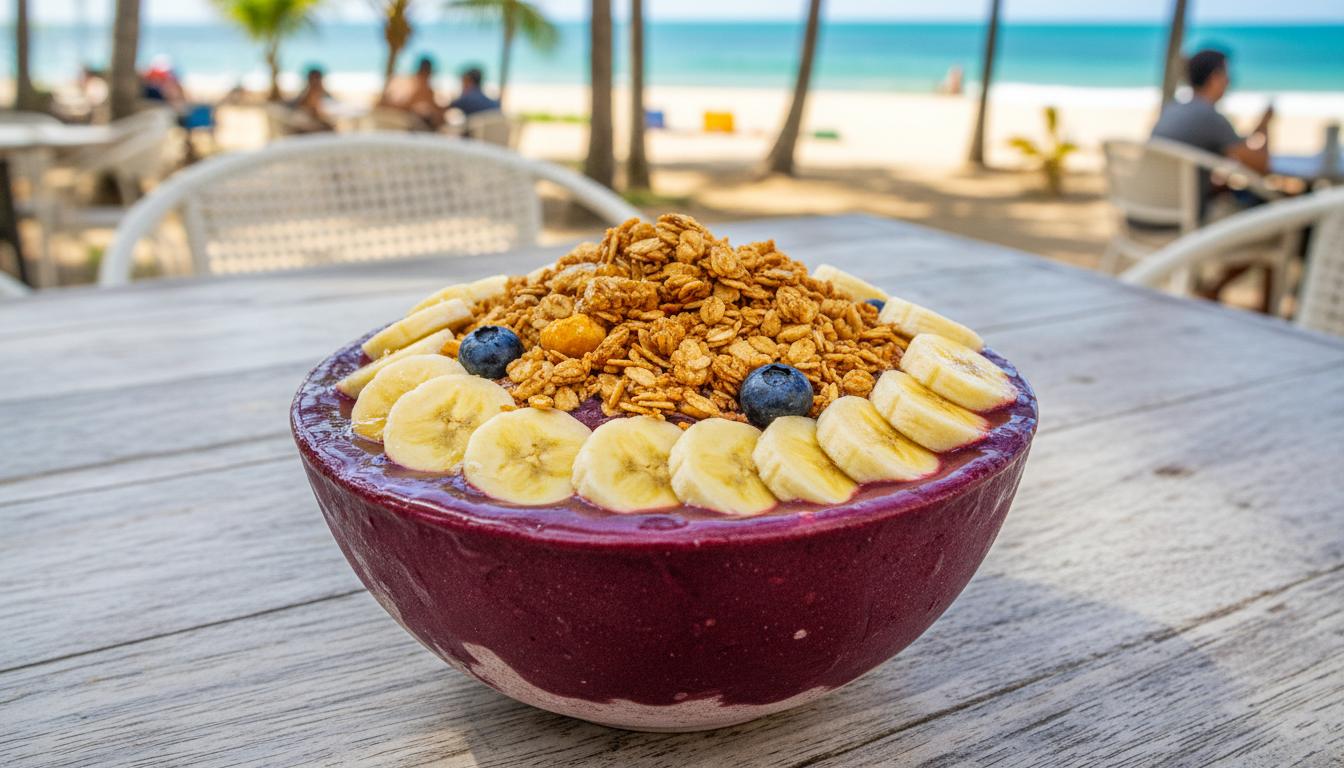 Açaí na tigela — the Amazonian superfood bowl that Rio made famous
Must-Try Brazilian Dishes
Feijoada
Brazil’s national dish — a black bean stew with pork, served with rice, collard greens, orange slices, and farofa. Traditionally eaten on Wednesdays and Saturdays. Try it at a traditional boteco, not a hotel restaurant.
Pão de Queijo
Chewy, warm cheese bread made from tapioca flour and Minas cheese. Found at every corner bakery. The best ones are crispy outside, gooey inside, and served fresh from the oven before 10 AM.
Açaí na Tigela
The Amazonian superfood bowl that Rio made famous. Thick, cold açaí puree topped with granola and banana. Not a smoothie — eat it with a spoon. Every juice bar has their own recipe. Post-workout or post-beach fuel.
Churrasco & Rodízio
All-you-can-eat Brazilian barbecue. Waiters circle with skewers of picanha (top sirloin), linguica (sausage), and chicken hearts. Green card = keep coming. Red card = stop. Come hungry and pace yourself.
Where to Eat in Ipanema
The best dining in Rio is concentrated on two streets: Rua Visconde de Pirajá and Rua Barão da Torre. Walk either one and you’ll pass Michelin-recommended bistros, traditional botecos, sushi counters, and juice bars — all within 10 minutes of the penthouse.
- Fasano Al Mare — Fine dining seafood, Italian-Brazilian
- Garota de Ipanema — Historic café where the song was written
- Azumi — Outstanding Japanese-Brazilian fusion
- Polis Sucos — Classic açaí and juice bar since 1985
- Amazônia Soul — Amazonian ingredients, modern technique
Getting Around
Rio’s transportation network covers the city well if you know which mode to use for which trip. Here’s the breakdown from someone who lives here.
Uber
The easiest and safest way to get around Rio. Uber works everywhere in the South Zone and is affordable — most trips under R$30. Use Uber Comfort for air-conditioned cars in summer. Avoid regular taxis unless ordered by your hotel.
Metro
Clean, safe, and efficient. Line 4 connects Ipanema (General Osório) to Barra da Tijuca. Line 1 connects Ipanema to downtown, Maracanã, and the north zone. R$6.50 per ride. Avoid rush hours (7-9 AM, 6-8 PM) if possible.
Metro Rio →Walking
Ipanema, Leblon, and Copacabana are all walkable. The beach boardwalk connects all three. Most of what you need — beach, restaurants, grocery, metro — is within a 10-minute walk of the penthouse. Bring comfortable shoes for the cobblestones.
Bike & Scooter
Itaú bikes are stationed everywhere and cost R$15/day for unlimited 1-hour rides. Electric scooters (Yellow, Grin) are scattered around Ipanema and Copacabana. The dedicated bike lane along the beach is flat and scenic — perfect for sunrise rides.
Bus (Ônibus)
Extensive network and very cheap (R$4.30). But routes are confusing for visitors, buses get crowded, and they’re slower than Uber. Use only for short, simple trips where you know the route number.
Car Rental
Skip it unless you’re doing day trips to Búzios or Paraty. Parking in Ipanema is expensive and scarce. Traffic is unpredictable. Uber is cheaper and removes the headache. Rent only for out-of-city excursions.
Safety Tips
Rio has a reputation that doesn’t match reality for careful travelers. The South Zone (Zona Sul) — Ipanema, Leblon, Copacabana, Jardim Botânico — is as safe as any major city’s tourist district. Here’s how to stay smart.
General Safety Rules
Stay in the South Zone
Ipanema, Leblon, Copacabana, and Jardim Botânico are well-patrolled, heavily trafficked, and designed for visitors. Avoid wandering into unfamiliar neighborhoods after dark. Stick to the main avenues and beachfront.
Use Uber, Not Street Taxis
Uber is tracked, rated, and safer than hailing a taxi on the street. Never get into an unmarked car. At the airport, use the official Uber pickup zones or pre-booked transfers.
Don’t Flash Valuables
Leave expensive watches, heavy jewelry, and flashy cameras in the apartment. Use your phone discreetly on the street. At the beach, don’t leave bags unattended while swimming — rent a barraca chair and tip the attendant to watch your things.
Building Security Matters
Choose accommodation with 24/7 doorman (porteiro) and secure entry. The Ipanema Beach Penthouse has round-the-clock building security, keycard elevator access, and staffed lobby — standard for quality buildings in Ipanema.
For Solo Travelers
Rio is fantastic for solo travelers. Ipanema’s street life means you’re never alone, even when you’re by yourself. Eat at the bar counter (balcão) at any boteco — you’ll chat with locals within minutes. Join a group hike to Pedra Bonita (meet at Praça Presidente Aguirre Cerda). The Sunday Hippie Fair is perfect for solo browsing. Avoid empty beaches after dark and empty streets in Centro at night.
For Families
Rio is surprisingly family-friendly. Leblon Beach has calmer waves than Ipanema. The Botanical Garden, Museum of Tomorrow, and Rio Aquarium are hits with kids. The lagoon has paddle boats and bike rentals. Family-focused restaurants are common — look for “espaço kids” on the menu. Building pools and rooftop spaces give kids a safe place to burn energy after sightseeing.
Seasonal Events
Rio’s calendar is packed with events that transform the city. Plan around them — or avoid them if you prefer quiet.
| Event | When | What to Expect | Booking Advice |
|---|---|---|---|
| Carnival | February / March | Street parties (blocos), Sambódromo parade, city-wide celebration | Book 4-6 months ahead. Prices triple. |
| New Year’s Eve | December 31 | Copacabana fireworks, millions in white, all-night parties | Book 3+ months ahead. Minimum stay requirements. |
| Rio Film Festival | October | Brazil’s biggest film event, screenings city-wide | Moderate impact on hotels. |
| Rock in Rio | September (even years) | Massive music festival in Barra. 100k+ attendees. | Book early if attending. Traffic impact. |
| Hippie Fair | Every Sunday | Ipanema’s open-air arts & crafts market since 1968 | No booking impact. Free to attend. |
| Christmas | December | Decorated lagoons, family dinners, summer Christmas vibe | Moderate prices. Warm weather holidays. |
 New Year’s Eve from the rooftop — fireworks over the city without the crowds
Day Trips
When you’ve seen the main sights, the areas surrounding Rio offer beaches, colonial towns, and tropical islands worth the drive.
Búzios
Charming peninsula town 2.5 hours north with 23 beaches, cobblestone streets, and a Brigitte Bardot legacy. The Orla Bardot boardwalk connects the best beaches. Great for seafood, boutique shopping, and a slower pace.
Paraty
UNESCO-listed colonial town surrounded by rainforest and islands. The historic center has no cars — just horse-drawn carts and cobblestones. Boat trips to nearby islands leave from the main pier. Best for history and nature combined.
Ilha Grande
Car-free island off the coast with jungle hikes, crystal-clear coves, and Lopes Mendes beach — regularly voted one of Brazil’s best. Hike the rainforest trails or take boat tours around the island.
Petrópolis
Imperial mountain retreat where Brazilian royalty summered. Visit the Imperial Museum, Crystal Palace, and the historic brewery. Much cooler than Rio — bring a light jacket.
Niterói
Across Guanabara Bay, famous for Oscar Niemeyer’s Contemporary Art Museum (MAC) — a flying saucer-shaped building with stunning views back to Rio. The ferry ride from Praça XV is part of the experience.
Serra dos Órgãos
National park with dramatic mountain peaks, hiking trails, and the famous Dedo de Deus (God’s Finger) rock formation. For serious hikers — the Petrópolis-Teresópolis crossing is a classic 2-day trek.
 Pedra Bonita in Tijuca National Forest — the hang gliding launch point with jaw-dropping views
Packing List
Rio’s tropical climate means light layers, sun protection, and beach gear. Here’s what to bring and what to leave at home.
Clothing
- Light linen shirts (3-4)
- Swim trunks / bikinis (2-3)
- Beach cover-up / sarong
- Light sweater (for air conditioning)
- Comfortable walking sandals
- Sneakers for hiking
- One nicer outfit for dining
Sun & Beach
- SPF 50+ sunscreen
- UV-blocking sunglasses
- Wide-brim hat or cap
- Beach bag
- Reusable water bottle
- Waterproof phone case
- After-sun aloe gel
Tech & Documents
- Passport (6+ months validity)
- Credit cards + backup
- Portable charger
- Universal adapter (Type N)
- Travel insurance docs
- Proof of accommodation
- Google Translate offline
Health
- Insect repellent
- Anti-diarrheal medication
- Basic first aid kit
- Prescription medications
- Electrolyte packets
- Hand sanitizer
- Yellow fever cert (if required)
See the Penthouse Rooftop
Experience the private rooftop pool, 360° views, and the sunset over Two Brothers Mountain from the Ipanema Beach Penthouse.

Frequently Asked Questions
The best time to visit Rio is from December to March, when temperatures range from 25°C to 35°C (77°F to 95°F). Summer (December-February) is hot and ideal for beach days but more crowded. March-April offers warm weather with fewer tourists and lower prices. Avoid June-August if you want beach weather — it’s cooler (18°C-25°C) and rainier. Carnival (February or March) and New Year’s Eve are peak season and require booking months in advance.
Yes, Rio is safe for tourists who use common sense. Stick to neighborhoods like Ipanema, Leblon, Copacabana, and Jardim Botanico. Avoid walking alone at night on empty streets, don’t flash expensive jewelry or electronics, and use Uber instead of hailing taxis on the street. The south zone (Zona Sul) is well-patrolled and heavily trafficked by locals and tourists alike. Building security is standard in Ipanema, with 24/7 doormen.
You need at least 4-5 days in Rio to see the major sights without rushing. Three days covers Christ the Redeemer, Sugarloaf, Copacabana, Ipanema, and a beach day. Five days adds Tijuca Forest, Santa Teresa, the Botanical Garden, Maracanã, and a full day trip to Búzios or Paraty. Seven days lets you experience Rio like a local — hidden beaches, samba nights, rooftop bars, and slow mornings.
Ipanema is the best neighborhood to stay in Rio de Janeiro. It’s safe, walkable, has the best beach (Posto 9), world-class dining on Rua Visconde de Pirajá and Barão da Torre, and easy metro access to everywhere. Leblon is quieter and more upscale. Copacabana is iconic but more touristy and crowded. Avoid Centro at night and the north zone unless you know the area well.
No, you don’t need Portuguese to visit Rio. English is widely spoken in tourist areas, hotels, restaurants, and shops in Ipanema, Leblon, and Copacabana. However, learning basic phrases like ‘obrigado’ (thank you), ‘por favor’ (please), ‘a conta’ (the bill), and ‘quanto custa’ (how much) goes a long way with locals. Google Translate works well for menus and signs.
Brazil uses the Brazilian Real (BRL / R$). Credit cards are widely accepted in Ipanema, Leblon, and tourist areas — Visa and Mastercard work everywhere. Amex is accepted at higher-end places. Carry some cash for street vendors, beach barracas, and small botecos. ATMs are available throughout Ipanema. Notify your bank before traveling.
Visa requirements depend on your nationality. US, Canadian, Australian, and Japanese citizens can enter visa-free for up to 90 days with a valid passport. European Union citizens also enter visa-free. Check the Brazilian consulate website for your specific country. Your passport must be valid for at least 6 months beyond your planned departure.
From Galeão International Airport (GIG), take an Uber (R$80-120, 40-60 minutes depending on traffic) or a pre-booked private transfer. There’s also an airport bus (Real Auto Ônibus, R$20) that drops at major hotels. From Santos Dumont (SDU, domestic), Uber is R$30-50 and takes 20-30 minutes. Both airports have official Uber pickup zones — follow the signs.
Stay Where the Guide Begins
The Ipanema Beach Penthouse is the base camp for everything in this guide. Private rooftop pool. 360° views. 2.5 blocks from Posto 9. Book direct and Ryan will personally help you plan your Rio itinerary.
Book Your Stay